
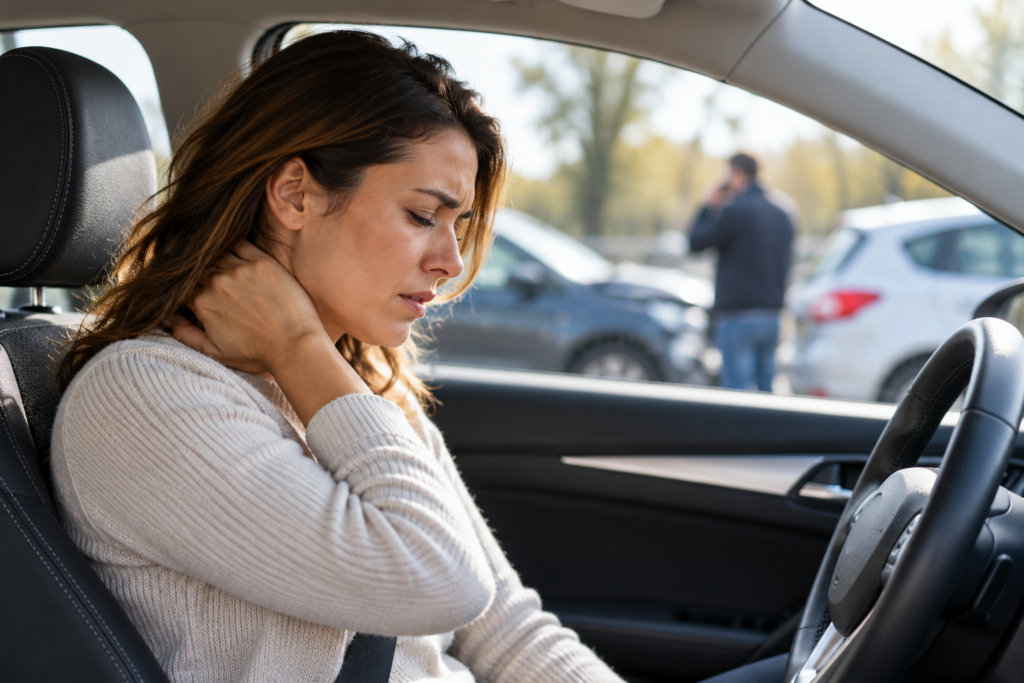
 Neck pain and stiffness are common symptoms following a car accident, particularly with whiplash injuries that we treat at Precision Healing in NW Portland.
After a car accident, you might walk away feeling relatively fine, only to wake up the next morning with a stiff neck, a headache, or pain across your shoulders and lower back. Sometimes symptoms do not fully develop until two or three days after the collision. This is something we regularly see at Precision Healing in Northwest Portland. Even a relatively minor collision can place considerable stress on muscles and other soft tissues. Some people recover quickly; others experience symptoms requiring weeks or months of treatment. Recovery is not always a straight line.
Why Pain Can Appear Days After an Accident
During a collision, sudden forces can strain muscles and other tissues, particularly around the neck, shoulders, and spine. Whiplash is familiar, but it is not the only problem we see. Patients may experience headaches, restricted neck movement, lower-back discomfort, muscle guarding, and difficulty sleeping or performing everyday activities. An accident may also aggravate an existing condition. Symptoms can change over the first several days. Feeling relatively comfortable immediately afterward does not necessarily mean there has been no injury. Medical evaluation is important, particularly for new or worsening symptoms, dizziness, confusion, neurological changes, or other concerning signs.
How Massage Therapy Fits Into Recovery
Massage therapy can be one part of a broader recovery plan. At Precision Healing, our goal is not simply to make tight muscles feel better for an hour. We want to understand how the injury affects movement, comfort, sleep, and daily function. Someone with headaches may also have restricted neck movement and tension around the upper cervical spine and shoulders. Someone with lower-back pain may guard movement or struggle when moving from sitting to standing. These details help guide treatment.
An Individualized Approach
We do not use one standard routine for everyone after an accident. Our therapists select techniques based on the patient’s tissues, symptoms, and functional limitations at that appointment. That may include myofascial techniques where tissue restriction is present, neuromuscular or trigger-point therapy where specific muscular problems are identified, or tissue mobilization, stretching, and range-of-motion work when appropriate. These methods may be integrated in one session. Treatment intensity must match tolerance. A highly sensitive patient may benefit from gentle or indirect work rather than deeper pressure. Effective treatment does not have to be painful.
Reassessment as Recovery Changes
What you need at the first appointment may be quite different from what you need three or four weeks later. We monitor changes in pain, range of motion, sleep, and daily activities. Can you turn your head while driving? Are headaches less frequent? Can you sit at your desk more comfortably? Are you sleeping better? Recovery is about getting back to everyday life, not just feeling better on the massage table.
How Often Should You Receive Massage?
There is no single schedule that works for everyone. We generally follow the prescribing healthcare provider’s recommended frequency, monitor responses, and communicate when progress suggests an adjustment might help. If relief fades quickly, that may be useful information for discussing frequency with the provider. As improvements last longer, appointments may become less frequent. The goal is a schedule informed by actual progress rather than an arbitrary routine.
Working With Other Healthcare Providers
Massage therapy often works best as part of coordinated care. We regularly see patients who also receive chiropractic care or physical therapy. With patient authorization, we can share observations such as changes in range of motion, persistent muscular restrictions, reported pain, and daily functional limitations. Massage does not replace medical care, chiropractic treatment, or physical therapy. Our role is to contribute focused soft-tissue care within a broader recovery plan.
Common Mistakes During Recovery
Returning to full activity too quickly can trigger setbacks. Several good days do not necessarily mean the body is ready for demanding workouts or an immediate return to every pre-accident activity. Inconsistent appointments can also make it harder to monitor progress, address lingering symptoms, and maintain a clear record of recovery. Consistency matters especially when care is billed through a motor vehicle accident claim.
Oregon PIP Insurance and Massage Therapy
Oregon personal injury protection (PIP) insurance may help pay for medically necessary care after a motor vehicle accident, subject to the policy, claim status, and applicable requirements. Precision Healing bills eligible PIP claims directly, but coverage is not guaranteed. Patients should contact their insurance adjuster for coverage questions and remaining benefits; our clinic cannot see the available PIP balance. Patients remain financially responsible for charges that an insurer denies or does not pay.
What Recovery Can Look Like
Our goal is always to help people feel like themselves again, but with car accidents that progress can come in layers. You might feel better in one area and then notice something else show up as your body settles. Some recoveries move quickly, others take months. We do not promise 100 percent overnight, but we do look for meaningful progress. Sessions should feel therapeutic, not like “no pain, no gain.” We are working toward better comfort and function over time.
Getting Started at Precision Healing
If you have been in a car accident and are considering massage therapy, seek appropriate medical evaluation first, obtain the required prescription, and contact our clinic to review the claim-intake requirements. We can explain our direct-billing process, but your adjuster is the source for coverage and benefit-balance questions. Precision Healing is located in Northwest Portland. Call or text 503-477-2463 to discuss next steps.
For More Information about treatment visit our Car Accident Treatment Page